Late-Summer Escape Artists: Why Dogs Bolt More in August (and How to Stop It)
“The grass is always greener on the other side of the fence.” Whoever coined that old saying must have owned a dog in August. Every year around late summer, Wisconsin pet owners watch a dog who's stayed home all year suddenly decide the neighbor's yard, the cornfield down the road, or the smells drifting over from the county fair are worth investigating. If you've been trying to stop your dog from escaping the yard, this is the month it matters most — and the good news is that August escapes are predictable, which means they're preventable.
Why August Turns Good Dogs Into Escape Artists
Nothing is wrong with your dog. August just stacks the deck against you. A few things happen at once this time of year, and together they turn a homebody into a runner.
Wildlife is on the move
Late summer is rush hour for Wisconsin wildlife. Rabbits are raising their last litters of the season, young raccoons and deer are striking out on their own, and squirrels are getting busy ahead of fall. To a dog with any prey drive at all, your yard has never smelled more interesting. One flash of a cottontail at the fence line and instinct takes over.
Backyard Fact: A dog's nose is somewhere between 10,000 and 100,000 times more sensitive than yours. The raccoon that crossed your lawn at 2 a.m. is breaking news to your dog at 7 a.m. — and a very good reason to go find out where it went.
Storm season rattles nerves
August is one of Wisconsin's most active months for thunderstorms, and a panicked dog is an escape artist like no other. Dogs that would never test a boundary on a calm day will climb, dig, or bulldoze their way out when thunder rolls in. Many of the “he's never done this before” calls we hear trace back to one bad storm.
The dog days are real
When it's 88 degrees and humid, walks get shorter and play sessions get skipped. All that unspent energy has to go somewhere. A bored, under-exercised dog left alone in the yard starts looking for a project, and “dig under the gate” is a very satisfying project.
Summer routines are chaos
Cookouts, vacations, kids running in and out, guests who don't know the gate has a trick latch. August gives your dog more open doors and unlatched gates than any other month. Most escapes aren't dramatic jailbreaks. They're a dog walking through an opening a human left behind.
Fence Line Insight: Most late-summer escapes happen at a weak point that already existed — a gate that doesn't self-close, a dug spot behind the shed, a gap where the fence meets the house. Walk your boundary once a week in August. Your dog already knows where the weak spots are; you should too.
How to Stop Your Dog From Escaping the Yard
There's no single trick that fixes a runner. What works is removing the opportunity, lowering the drive, and backing it all up with a boundary your dog actually respects. Here's how to do each.
1. Patch the weak spots first
Start with the boring stuff. Add self-closing hardware to gates, fill and block dug spots with buried rock or chicken wire, and check where the fence meets structures. If your dog is a climber, look for launch points like woodpiles, AC units, and raised beds sitting against the fence line.
2. Tire the brain, not just the legs
In August heat, you can't always burn energy with distance. Burn it with brainwork instead. Scatter kibble in the grass and let your dog hunt for it, play ten minutes of “find it” with treats hidden around the yard, or work through a food puzzle in the shade. Scent games work a dog's brain harder than a lap around the block, and a mentally tired dog is far less interested in what's beyond the fence.
Backyard Fact: Early morning is prime time for both walks and escapes. Ground scents from overnight wildlife are freshest before the heat sets in — the same reason a 7 a.m. sniff walk satisfies your dog is the reason an unsupervised 7 a.m. yard session tempts him.
3. Build a recall that beats a rabbit
A reliable “come” is your safety net. Practice it daily with rewards your dog would trade a squirrel for — real chicken, cheese, a favorite tug toy. And never, ever punish a dog who finally comes back. If returning home feels bad, your dog learns that staying gone is the better deal.
4. Fix the boundary itself
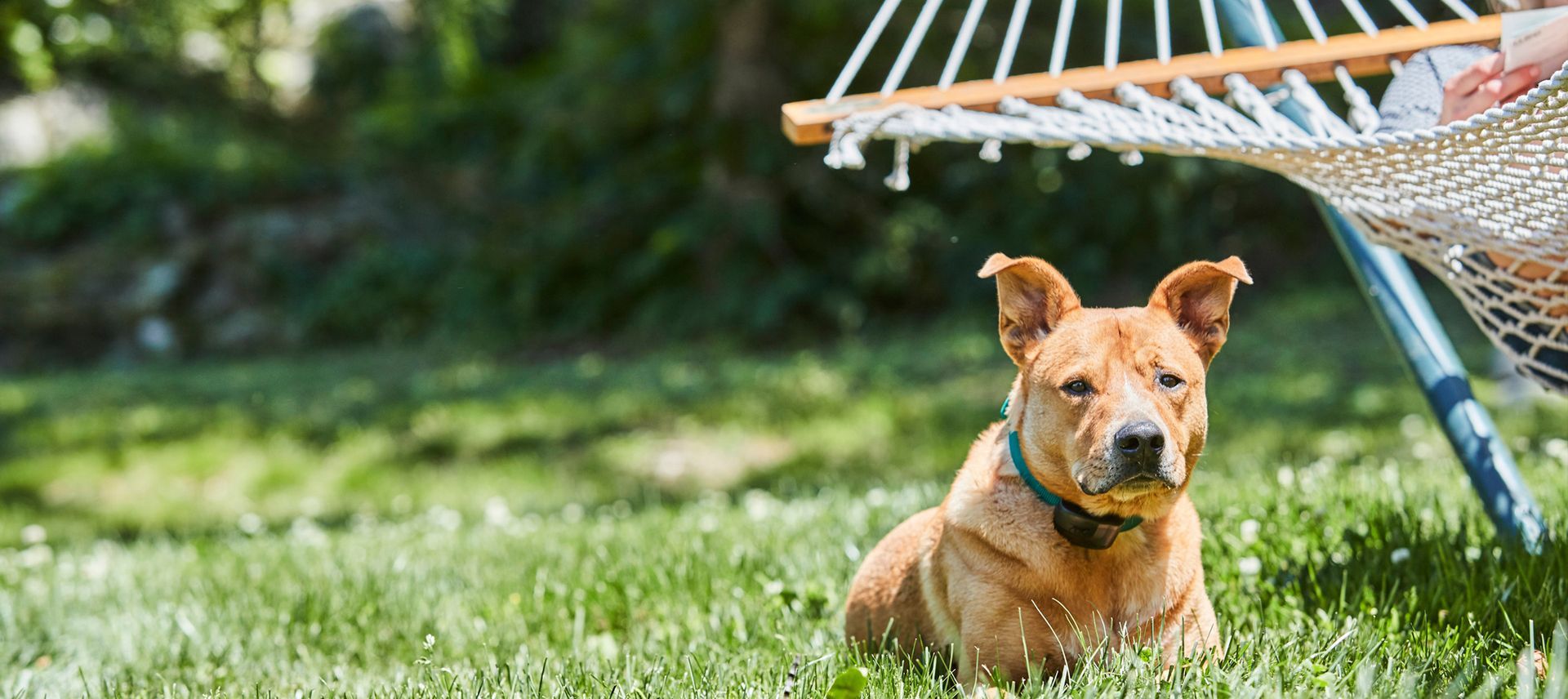
If your dog has already learned that the fence is negotiable, hardware patches and enrichment may not be enough. Traditional fences fail at the same three points every time: over, under, and through the gate. A professionally installed hidden dog fence solves all three at once. A boundary wire buried around your property sends a signal to your dog's collar, and structured training teaches your dog exactly where the line is — no gate to leave open, no ground to dig under.
This is where local expertise earns its keep. DogWatch of Wisconsin designs underground dog fences customized to your property — following wooded lot lines, wrapping around gardens and ponds, covering acreage a physical fence never could — then trains your dog to respect the boundary, with equipment backed by a lifetime warranty. For a dog who's made escaping a hobby, that combination of a consistent boundary plus professional boundary training is what breaks the habit.
From the Installer: “Half the calls we get in late summer start with ‘he's never done this before.’ Escaping is a habit, and it builds fast — every successful trip out of the yard makes the next one more likely. The best time to fix the boundary is after the first escape, not the fifth.”
Fence Line Insight: A hidden fence removes the two most common failure points of any physical fence: the gate somebody left open and the ground underneath it. It also travels with your landscaping — no ugly barriers between your dog and your view.
Don't Wait for the Second Escape
The first escape is a rehearsal. The second one is a routine. If your dog slipped out this summer, take it as the warning it is: patch the weak spots this weekend, add ten minutes of brainwork to the daily routine, and if the boundary itself is the problem, get it fixed before fall wildlife season makes everything worse. A free in-yard estimate costs you nothing but a half hour — and it beats another evening driving the back roads calling your dog's name.
Frequently Asked Questions
What's the best way to stop your dog from escaping the yard?
Combine three things: remove the opportunity (secure gates, fill dug spots, clear climbing launch points), lower the drive (daily exercise plus scent games and enrichment), and back it up with a boundary your dog can't slip through, like a professionally installed and trained hidden fence. Any one of these alone tends to fail eventually. Together, they cover the reasons dogs run and the routes they use to do it.
Will a hidden fence work for a dog that has already learned to escape?
Yes — training is what makes the difference. Repeat escapers haven't learned that boundaries don't apply to them; they've learned that your current boundary doesn't. Hidden fence training uses flags, warning tones, and short supervised sessions to teach a new, consistent line, and most dogs are reliably respecting it within a couple of weeks. Because the boundary is buried, there's nothing to dig under, jump over, or push through, which removes the shortcuts an experienced escape artist relies on.